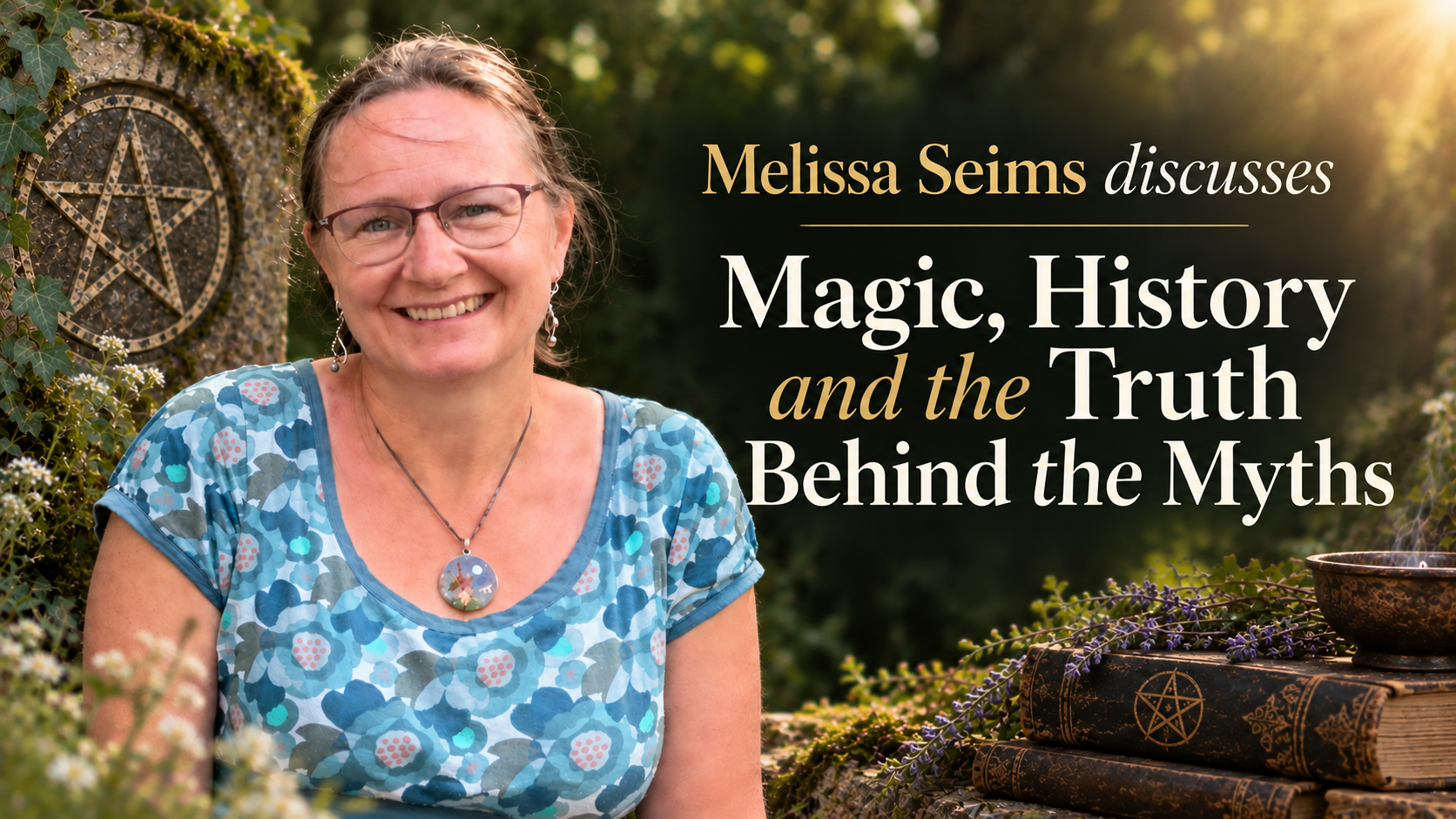

Today we are joined by Melissa Seims where she discusses everything from how she first became involved in magic, the history, well known figures and much more. Huge thanks to Melissa for going into so much detail. We have included links to her website at the end of the post, as well as her books and a detailed biography. If you have enjoyed this interview, please share it with others who may also enjoy it and if you have any thoughts or questions please post them in the comments.

Interview with Melissa Seims
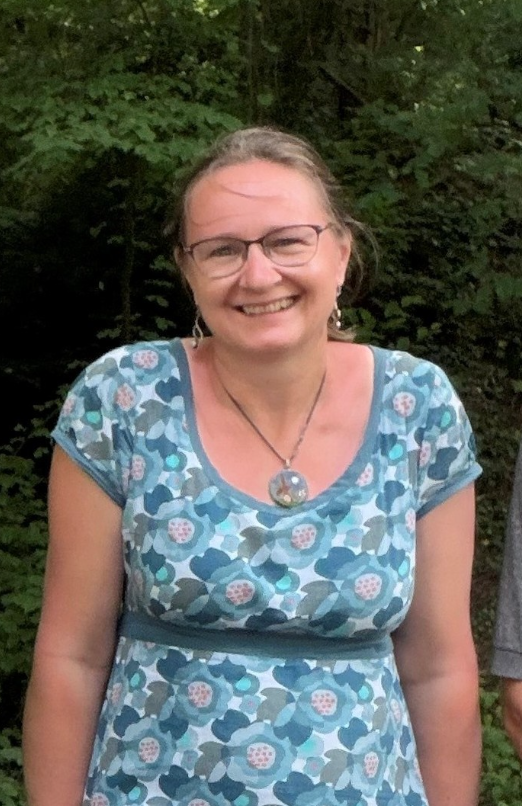
Entering the Magical World
PAA: You have been involved in magic and witchcraft for decades. Before you had teachers, initiations or historical knowledge, what were you actually looking for when you first began practising?
When I was a young child, my godmother played the organ at our local Baptist chapel, and she would take me there every Sunday. I loved the singing, I loved God and Jesus and I had a strong spiritual impulse. But as I grew older, I also loved nature; I wanted to know the names of birds and butterflies, and that sort of thing isn’t something you find in the Bible. So, I naturally gravitated towards the Pagan paths which also had the extra bonus of having Goddesses as well as numerous Gods. As a young girl the Bible also didn’t really have the best female role models- which was another reason why it fell out of favour with me.
I always believed and felt there was more – I have a strong imagination but also tempered by a strong drive in wanting to know why! I also love science and knowing what something is called, cause and effect etc… but I think there is something more we still don’t fully understand and can’t currently explain.
PAA: Was there an early experience that convinced you there was more to magic than imagination, symbolism or belief?
I saw mermaids when I was a young child! I was on a family holiday in Cornwall, and by the sea which was a rarity for me and so I would have been very excited by it all. I now think as children we are more able to see these sorts of things, and they were possibly elemental Undines which my child brain ‘saw’ as mermaids. That was the first of several experiences I’ve had that I cannot adequately explain and believe me, I’ve tried to! These mermaids are the only ‘magical’ things I’ve ever seen with my eyes, but I’ve also had other unexplainable and strange experiences that led me to conclude that there is more than what can currently adequately explain, and I think is best put in the realm of ‘Magic’.
As a writer I also see that as a very magical process which has convinced me of the reality of ‘muses’ – I talk more about that below.
Charles Clark and Direct Transmission
PAA: You were initiated by Charles Clark, who belonged to an earlier generation of Gardnerian witchcraft and had personally known figures including Gerald Gardner and Doreen Valiente. What was he actually like as a man, magician and teacher?
Meeting Charles Clark was an incredible, one in a million-type experience. I was about 20 at the time. Back then, I was reading books about Witchcraft by the Farrar’s, Doreen Valiente, and Patricia Crowther as well as ceremonial magic books. I was also running an eclectic Pagan and magical ritual group in Peterborough (UK), and I was DESPERATE to be initiated. One of the members of the group was an initiate into Gardnerian witchcraft and another was involved with traditional witchcraft. I thought I would end up being initiated through one of those routes…. I thought wrong!
Another member, Iona, moved up to Scotland to live with the outsider artist John Upton. He had been in Brighton in the 1960s and 70s and had known and worked with Doreen Valiente. Along with David Johnson, my partner at that time, I travelled up to Scotland to visit Iona and John. I was especially excited about meeting John and hearing more on Doreen – I was wondering if he might initiate us. I was to come back initiated but not by John. This is where it got even more magical…
Not long after we arrived, John Upton mentioned to us that he had been on a bus from Dreghorn into Irvine (on the west coast of Scotland) a few weeks earlier, and had got chatting to a man on the bus about magic and Witchcraft. This man, Charles Clark, said he had known Gerald Gardner! John suggested we go and visit him as he lived quite literally around the corner. I was quite dubious as I had read voraciously and never heard of Charles Clark.
Anyway, round we went and very quickly Charles started pulling original letters from Gerald Gardner and Doreen Valiente from his drawers. The rest, as they say, is history! David and I were initiated by Charles, and we went back to Peterborough and started our own Gardnerian Coven.
A few years later, I moved to Scotland (without David) and spent more time with Charles, John and Iona and we ran a coven up there. Later, I returned to England and restarted a coven again with David.
Sadly, about 11 years after our initiation, David was tragically killed, knocked off his motorbike by a drunk driver. I felt like I had lost an arm. He had been the severity to my mercy, and we had a very good dynamic dance between us and it had worked. Ultimately, I decided to close the coven and join a Golden Dawn order to focus on my own magical journey. I’ve not looked back and that was over 20 years ago now.
PAA: When Clark taught witchcraft, what did he place the greatest importance on? Was his emphasis primarily ritual technique, altered states, relationship with the gods, magical power, personal transformation — or something else?
Charles was very big on working couples – something that I think reflected the way Gardnerian witchcraft was in the 1950s. In the 1960s, it seems to have shifted more towards stronger High Priestess focussed groups. This was probably in part due to the wave of feminism that had started to make itself felt.
Charles encouraged reading around a wide range of subjects such as tarot and natural healing. He conveyed the Craft as something very simple and told me that ‘The Wica’ always found their own and that it was like a family.
I didn’t necessarily subscribe to all his ideas, but he was a gentle teacher. He would give me books to read and encouraged me to just practice the work. He was always adamant that I should find my own way with mine and David’s coven, and to feel free to change things to suit ourselves and our Coven members.
PAA: What did you learn through actually working with Charles Clark that could never have been adequately transmitted through a Book of Shadows or published instructions?
With Charles I knew that he was representative of an early period of Gardnerian Witchcraft, so his ideas held a lot of strength and authenticity for me. Charles had been charged by Gardner to spread the Craft in Scotland in the 1950s and 60s and this is what he had set about doing but people politics eventually got in the way. When I met him in 1993, he was quite an old man and it was clear he was completely out of touch with how popular witchcraft was starting to become, but yet his love for the Craft was still very evident.
I have always been intrigued by how these things change and what causes them to change. Pre-1960 Gardnerian witchcraft had fewer adherents, and it was very much an emergent and changing system. Doreen can be credited for a lot of the change and she I feel, did make it better- it became more Witchcraft and less ceremonial magic in flavour.
One of the significant things Charles impressed on me, aside from the emphasis on working couples, was the spelling ‘Wica’ with one ‘c’. For Charles the two ‘c’ version (‘Wicca’) came slightly later, and he associated it with another 1950s/60s witch named Charles Cardell. Historical evidence supports this. Gardner himself never used the two ‘c’ version of Wicca – I think that spelling became more popular through the writings of people like Doreen Valiente who pointed out the etymology of the word and indeed Charles Cardell used a two ‘c’ form on occasion. Today Witchcraft and Wicca are very common words, and the one ‘c’ version now appears to have started being reclaimed by some Gardnerian branches. The terms are not directly interchangeable – you became one of ‘The Wica’ on initiation. Charles’ story revealed the politics behind the word at a time for him, and I think that’s important to understand.
Of course, Witchcraft and Wicca now is much more diverse and more encompassing than Gardnerian Witchcraft – it’s also become big business! Overall, it reflects a desire from people to connect with nature and the Earths cycles and is now considered a religion by many modern witches. It is also flexible and not dogmatic which I think are big plus points.
I don’t like the word religion myself and rarely use it, but modern witchcraft is certainly a very accessible spiritual path. Access to divinity is open to all and does not require the medium of a priest / vicar or similar, that many other religions demand. It can also be practiced anywhere – in your front room or in a woodland grove, no churches or special buildings required. Being able to practice it surrounded by nature itself, is another big plus point for me.
Charles was also a big advocate of using the Book of Shadows as a toolbox – one you were free to change based on the desires from your coven. As such, I rarely did a straight ritual from it. Some of the Sabbats are very short so I always extended them with relevant material / songs/ poems / chants and other pertinent magical practices. I used to put a lot of time into crafting the rituals for greatest psychological impact. Writing initiation rituals was always my favourite thing to do, and I always tailored them to the individual. I felt free to do this due to the liberal attitude that Charles Clark had conveyed to me. He used to say to me that what he told me was what old Gerald would say.
PAA: Clark represented a living link to the formative period of Gardnerian Witchcraft. Did the Craft as he understood and practised it differ from what many people now think of as Gardnerian Wicca?
Yes I think it does – see previous answer.
What Really Happened in Early Witchcraft?
PAA: You later became deeply involved in researching the very period and personalities connected to the tradition in which you had been initiated. Did historical research ever force you to reconsider stories you had originally received as part of the tradition?
Not really no. I have always trusted what Charles said but initially I lacked independent evidence and I’m a bit of a pedant for such! I also knew that writing an article about him might cause a few ripples particularly because back then the general understanding was that one branch of Gardnerian witchcraft, which has an emphasis on lineages, had come from Gardner to Monique Wilson to Raymond Buckland. This was wrong. It was Charles who had initiated the Wilson’s and in part, I wanted to address that inaccurate understanding.
Anyway, I wrote my first article about Charles as a result of David dying. He had wanted us to write on Charles for some time, so I wrote my first major article to honour David although I was tinged with regret that I hadn’t written it with him whilst he was still alive.
As I suspected it could be inflammatory, especially with regards to the Wilson’s, I initially set about finding more independent evidence. I found it in the notebooks of Doreen Valiente and other places. Philip Heselton was particularly helpful to me at this time. Ultimately, this whole thing was the start of me becoming an independent researcher and writer of modern witchcraft and then later the Golden Dawn. I didn’t set out to be one, and if it hadn’t been for David dying so tragically I probably wouldn’t be where I am now.
PAA: When you look at Gardner, Valiente, Cardell, Raymond Howard, Alex Sanders and others operating during roughly the same period, how interconnected was that world really? Were supposedly distinct traditions borrowing and influencing each other far more than later histories suggest?
Oh gosh, yes yes and yes – I’ve written about this in some of my articles (my articles have been compiled into two imminent books: Literary Necromancer: Witches and Witchcraft and Literary Necromancer: Magicians and Temples.). There were huge crossovers and influences between them all. My favourite one is where Doreen Valiente has effectively published chunks of the Coven of Atho magical book in the ‘Libre Umbrarum’ section of her book Witchcraft for Tomorrow but doesn’t directly state this. I love that woman! They were all being progressive in creating something of relevance for the people at that time and that involved taking thoughts and ideas from published books, other witches and older magical systems. You only have to spend a short time looking at this aspect and it readily becomes apparent.
PAA: Charles Cardell is often reduced either to fraud or eccentricity. Having researched him in considerable depth, what do you think people get wrong about him?
Cardell was certainly eccentric and I suspect, probably autistic. He also had strong semantic views and never used the word Witchcraft preferring instead terms like ‘Old Tradition’ and ‘Wicca’. ‘Witchcraft’ was a term he considered had been invented by the Catholic Church and used to persecute and indeed murder, many people a few centuries earlier. But for all intents and purposes, whatever Cardell was up to, we would nowadays term as Witchcraft.
The Coven of Atho is also a term the Cardell’s never used, that term should really be attributed to Ray Howard, who had worked as a handyman on the Cardell’s estate. The whole story of the Coven of Atho is a complex one with some truly outrageous moments in it!
Returning to Cardell, through research I was able to get a much better sense of him as a person. He had an interest in magic and the occult from his teenage years. What is also intriguing about him was that his father was a well-known stage magician (Paul Vandy) and Charles himself was especially skilled in hypnotism. So, he was familiar with ‘magic’ in multiple ways.
I often use the term literary necromancy when describing what I do. It is so important to try and understand an individual’s journey and life as well as give historical context – things were very different then. I pulled together the wider story through plaguing many people, attacking archives, and asking lots of questions. Writing my book Here Be Magick was like completing a jigsaw puzzle. I have found that if you persevere, things start falling into place and the puzzle starts to reveal the wider picture and the actual story is quite different from what many people currently think.
I also strongly believe in muses – they are like their own entities and if you have faith in them they deliver you gold mines in unexpected ways. This certainly happened when writing Here Be Magick, and it all helped me tell the much bigger and at times, truly bonkers story of the Cardells’ Ray Howard and the Coven of Atho.
Charles Cardell himself continues to be a bit of an enigma. I did the best I could in my book but ultimately the reality or not of his Witchcraft practices, largely hinges on the witness statement of William Hall – a reporter who hid in the bushes and watched a ritual on the Cardell’s estate in 1961 and then wrote a news story about it. This covert surveillance was engineered by Ray Howard (who coined the term the Coven of Atho). I do not believe the Cardell’s knew there was a reporter hiding in the undergrowth on their estate at that time.
As a direct result of the news story, it all ended up in a High Court case in 1967 where the Cardell’s continued to deny that they were practising ‘Witchcraft’. Semantics again ties heavily into all this.
Ultimately, Cardell’s story is one of riches to near-rags. I do believe he and Mary were practising some sort of Witchcraft, but they were also MUCH more secretive about it than Gardner and some of his initiates at that time (late 1950s/early 1960s) who were increasingly attracting and often willingly giving news stories. Their motives in part, were to make modern witchcraft more known and to attract further adherents, and it worked!
Cardell was also incensed by the skyclad (naked) element of Gardnerian Witchcraft, and Cardell had much more conservative views on such. Notably however, him and Gardner had once been on talking terms and had exchanged material. But later, Cardell believed that Gardner had sullied Witchcraft. In fact, in order to try and demonstrate this, in 1963, Cardell did the first republication of Leland 1899 book Aradia: the Gospel of the Witches. I am quite certain Cardell did this as a way of showing where Gardner was getting some of his ideas from. Cardell’s Aradia was followed in 1964 by his publication Witch by Rex Nemorensis (Cardell). This was the first time the Gardnerian Book of Shadows was published. Cardell had acquired a copy because of sending a ‘spy’ into Gardner’s camp to acquire the material. Again, that is another wonderful and true story. Basically, in the 1950s and 60s you ended up with a situation which saw witches going head-to-head, duplicity, deception and downright lying.
I do believe the Cardell’s’ were practising something magical and witchy– when you look at their wider life it’s hard to believe they weren’t. Charles and Mary always denied that the 1961 ritual took place and even appear to have tried to pass it off as an elaborate advertising skit for the magical mail order company they ran. Following Hall’s initial news report, the Cardell’s called their own press conference, but from photographic evidence, it’s also clear they had dressed things up in the few days prior, to make it appear as if it was a skit!
The whole story really does hinge on whether or not you believe William Halls report – and the thing to note here is that Hall was not seen as ‘gutter press’, he was a highly respected reporter at the time, the man ‘the big stars’ would talk to! Also, when you read his court witness report on the 1961 ritual which he submitted for the later, 1967 high court case, it does not read as if it has been fabricated. It would have been truly mortifying to the Cardell’s that their ritual was being furtively witnessed.
Although Cardell’s witchcraft (or Old Tradition) was very different from that of Gardner’s, today, they would both be understood as forms of Witchcraft.
I recommend my book to those who have had their interest piqued – honestly, the story is the sort of thing you couldn’t invent, and I did my best in pulling together the evidence in order to tell it. I struck gold whilst researching it and came across an unpublished autobiography that really helped to flesh Charles Cardell out in his formative years in the 1910s and 1920s and which filled in several key pieces of his personal jigsaw. As a result, I feel he has now moved from being a shadowy and controversial figure into a much more fleshed out person who was certainly magnificently single-minded.
It was all a very British witchcraft drama, with double-crossing and deception but you need to spend a while walking in all the main characters shoes, to fully understand it.
PAA: The Coven of Atho is particularly fascinating because it sits somewhere between documented history, extraordinary claims and genuine magical material. After all your research, what do you think Atho actually was?
So, the Head of Atho itself was a fake – it was Ray Howard’s own hand-carved invention. He carved the Head in c1960. Ray had been a handyman on the Cardell’s estate and was very close to them for a while, but ultimately their relationship turned sour and acrimonious. Howard was also hiding in the bushes with William Hall on that fateful night in 1961 and was the person who had got Hall involved.
It’s important to understand that Charles and Mary Cardell never used the term ‘Coven of Atho’. That was coined by Ray Howard. Basically, I think Ray Howard’s motives were more financially driven – but yet he also did have a genuine interest in witchcraft and even established what was probably the first ever temple of white witchcraft in 1963 at Old Treago Mill in Cornwall. You can again see how complex the wider story actually was.
It was also Ray Howard who put together the Coven of Atho correspondence course, that notably Doreen Valiente got involved with. But here’s the thing, that course, seems in part to have been based on the practices of the Cardell’s! It is possible that the word Atho, was inspired by Cardell’s use of the word ‘Athor’ and I find it hard to believe Howards own backstory on the Head of Atho involving a Romany gypsy he met as a child – though he stuck to his version of the story for his entire life. It makes it very hard to get to the objective truth when you know that people were being deceptive.
PAA: The Head of Atho acquired an elaborate mythology concerning its origins and significance. What did tracing its real history teach you about the way magical traditions create — and come to believe — their own myths?
People want to believe – we are intrinsically attracted to ideas that defy explanation and the idea of magic. But factually, when it comes to the Coven of Atho and Cardell’s old tradition there are still pieces to uncover – the puzzle is not yet entirely complete, but a much clearer picture emerged through my research into it. My book Here Be Magick gives all sides of the story, as well as the material used by Howard in his Coven of Atho, but ultimately it is up to the reader to make of it what they will.
Personally, I think Ray Howard, his Head of Atho and Coven of Atho practices and course that he sold, were largely an invention by him, but based on stuff that he had seen during his time with the Cardell’s or that Howard had read.
To this day some modern covens have an image of the Head of Atho on display, so the Head has certainly taken on a life of its own – irrespective of its true authenticity. This says a lot about how we as humans are captured by ideas and how we place our own values and beliefs on things. Does that make it less magical? It would seem not. Belief is a powerful thing.
PAA: When you strip away the later legends surrounding Gerald Gardner, what do you think his genuine contribution to modern magic was?
Gardner and the other early adherents were instrumental to paving the way for the resurgence in modern witchcraft. Their media publicity worked. But he was also doing what magical orders like the Golden Dawn had done previously. Essentially they were reinterpreting and reformulating earlier ideas to make them more relevant and attractive to people of their era. Interestingly, in Gardner’s earliest Book of Shadows, he was using the Golden Dawn’s Lesser Invoking Ritual of the Pentagram to cast the circle. I suspect it was Valiente who changed this to make it more in accordance with the idea of magical practices based on natural cycles. She would have recognised the LIRP as she was a student of the GD before she had met Gardner. It was a true magical spiderweb of interaction and influence. You can still see the Pentagram Rituals influence in modern Gardnerian practice.
I also suspect that Gardner was influenced by an older relative of his, Joseph Knight Gardner, who was in the GD’s Victorian temple in Bradford (Horus No. 5) but that’s another story …
Does Historical Authenticity Matter?
That’s a good question. I do think it matters as it speaks of the paths that have been followed and stories that all enabled us to get to where we are today. Those paths are not always easy. History shows patterns, the names and places change but it’s always similar stories and we can learn a lot from looking at and understanding this process. That doesn’t detract from magical practice I think it only enhances it as history carries a weight with it. Even if the historical stories have been fabricated!
Truth itself though, I feel carries even more weight and often, if things have been fabricated it’s important to ask why. Ultimately truth is so often subjective and its down to the individual how much emphasis they want to place on any story. As humans we simply love stories of people doing things a bit differently, they can inspire us, so even stories that are untrue can still carry their own weight and influence.
British magical history is full of amazing stories, the best ones often get further enhanced across time and then you have different perspectives, different accounts on the same incident and they often don’t always agree – it’s all part and parcel of what it is to be human. Perspective so often counts for a lot.
I also think magic is very psychological and as long as you believe in the deities and magical practices, even if you have completely invented them yourself, it doesn’t detract from the efficacy of the magical practice. This I think is why Chaos Magic also works and is something that still has a good following and which came out of Leeds in the 1980s. But that’s another story.
Britain has a rich magical history, and I think it’s something we should all be proud of. This is also why the group Custodia Borealis was established at the beginning of 2026. We are awaiting charity status and ultimately hope to establish a museum of magic and the occult in the North of England and it initially all inspired by the Scott Collection – the name given to the material that was saved and kept in private hands for over 120 years until I was given access to it and told its story and that of Bradford’s 1888 Golden Dawn Temple Horus No.5
It can be hard and lonely treading magical paths and Custodia Borealis’s vision will hopefully help unite us more, as well as serve the important role of dispelling misunderstood stories and urban myths and educating the general public about what magic actually is – though I suspect there will be many different answers to that, it comes with the territory!
PAA: If a ritual or magical system proves to be much newer than practitioners originally believed, should that matter if the practice itself works?
No, I don’t think it does, whilst history does carry its own weight, humans are Inventive and fashions change, ideas fall in and out of favour. When it comes to magic, what matters is your faith and belief and if others also buy into it then it only gets stronger and starts forming its own history.
PAA: Is there a point at which invented history becomes genuinely problematic? Where would you draw the line between legitimate myth-making within a magical tradition and simply deceiving people?
Through my research one thing that struck me is that your typical magician or witch tends to think a bit differently – this leads to some Incredible stories such as the time Charles Pace challenged Charles Cardell to a fire circle showdown at Stonehenge, or indeed the fact that people hid in undergrowth to watch the Cardell’s ritual. It actually makes me laugh and like everyone, I love a good story. But I do like to know if it is true or not, but as already mentioned, truth is often subjective and it can be very hard actually getting to objective truth.
These stories can also inspire us and make us feel less alone and encumbered by more mundane everyday life. To be a ceremonial magician or witch often attracts the label ‘weird’ but we only live once, life is short and if magical practice calls to you then own it. You’re not alone, but equally there aren’t huge numbers of us. That said, Witchcraft especially is now accepted, seen and understood much more favourably than it once was.
The magical orders still tend to be more secretive and fewer in number – it depends on what floats your boat as to what you’re going to be attracted to. For many witches, Witchcraft is now their religion but generally in magical orders their practices are not typically seen as religious ones. In fact, in the Golden Dawn, you can be an adherent of any religion, and it just doesn’t matter. In some Golden Dawn lines they have a phrase that goes something like this ‘Remember to hold all religions in reverence for there is none that do not contain a Ray from the ineffable Light that you are seeking.’
Returning to the question, In my book Here Be Magick, I describe Ray Howard as an ‘unreliable narrator’. I think he can be compared to Geoffrey of Monmouth who penned inaccurate stories about King Arthur. In that case, the stories served a larger purpose – they inspired and united people during a tumultuous time for Britain. As such I can’t really pick fault with the result. There are many ways of looking at the world and causing ripples … but I do draw a line at downright lying, if there isn’t a nobler reason.
Personally, I like to substantiate things and when you are dealing with people like Ray Howard who I think was being deceptive, the stories for me lose some of their weight and glamour – but it is us and our perceptions that give it that glamour and weight. It’s like that phrase from the X-files – we want to believe.
I also think we shouldn’t be too quick to sideline individuals based on brief snippets of their story. It’s always the quirky stuff that gets passed on but people are so much more complex. You have to look at the evidence and wider picture and make an effort to really try and understand the bigger story and not just be taken in by the juicy bits. I think in Cardell’s case, he was a challenging character and personality which didn’t help his cause, but I think in many ways he was more honest than Gardner and Howard at the time. But then Cardell also did try to obfuscate the truth after his 1961 ritual practice was revealed to the general public, but it was to try and protect his own beliefs about his practices that for him were meant to be secret. So, it is understandable once you understand him as an individual more.
I do draw the line on history being retrospectively changed in response to more modern and politically correct ideas. That is just wrong. I take a warts and all approach and historical context and time period is SO important and not to be forgotten. As humans we didn’t always think about things the way we do today – It’s one thing to try and establish historical accuracy, but to try and deliberately rewrite history is a big no-no.
In my books, I won’t always have everything right, but I try hard to tell a story using evidence and context. Ultimately it is up to the reader to make of it what they will, and new pieces of the puzzle will and do appear and can and will change a story and peoples understanding of it
Golden Dawn and Ritual Technology
PAA: Your research into the Golden Dawn has taken you down to the level of an individual working temple — Horus No. 5 in Bradford — rather than only the famous personalities. What did studying an actual temple reveal about how Golden Dawn magic was really practised?
This is a big question, and it would take me a long time to write the details here, but suffice to say the Scott Collection – which my last book Light in Extension is based on, is a true time machine of a collection. I feel it is the best single GD collection discovered to date. It allows us to go back to the 1880s and better understand exactly what they were doing and what they were using in their magical practice. Unquestionably the GD has been the single biggest influence on many of the magical paths that were to come after it. Though this was probably significantly aided by the fact that there were some big names in it such as Crowley, WB Yeats, Annie Horniman and Florence Farr. Having big names attached to anything always helps to further things due to the glamours we place on these people.
Bradfords Horus No.5 was the second temple of the original Golden Dawn and it had always been overlooked for two main reasons: Firstly, because of its location, so much attention is always given to our capital city London (which is also where the big names were), and secondly because most golden Dawn historians did not know that this collection existed!
When I was first told about it I was suspect, but I always remain open to things. Then I was invited to see it. It was a truly amazing day, and I went into meltdown when I saw the extent of it. I was then invited to write on it and didn’t look back. The result was my 2025 book Light in Extension and again the muses delivered me more amazing material during the course of my research and there were many magical synchronicities. I do feel I live a magically blessed life. My research was always effortless, but that is not meant to imply it was without effort. I just rarely found it hair-ripping. I am often reminded of the well-known phrase of Crowley: ‘A man who is doing his True Will has the inertia of the Universe to assist him’. I encourage anyone who fancies writing on anything, to just do it, you have to in order to actually understand how this quite magical process can work. I think the same is true of art generally.
PAA: You have studied the Lesser Ritual of the Pentagram both historically and practically. What was this ritual originally intended to accomplish, and how different is that from the way modern practitioners commonly use it?
I strongly believe that the LBRP can also be used as a mental health first aid for all magical people. In the original GD it was used to cleanse your space – a bit like casting a witch’s circle. It’s a simple ritual that gives your mind a firm message if you are prepared to buy into its ideas.
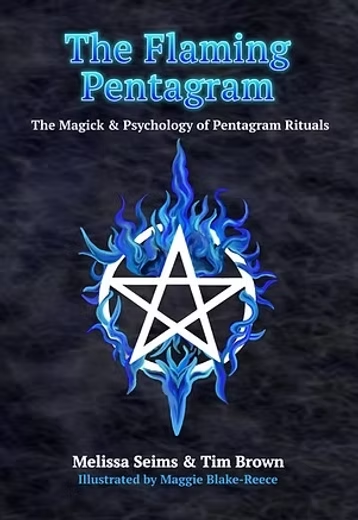
I was delighted when Tim Brown asked me to co-write The Flaming Pentagram with him. He has studied Jungian psychology, and I wanted to make this amazing but simple ritual relevant to modern magicians in a world that is becoming increasingly stressful.
The LBRP’s history is convoluted. The GD based it on older grimoires and Kabbalistic ideas, but it was they who created the ritual that so many magical practitioners use today. I suggest practising it daily for several weeks and it will take on a reality and reveal its magic to you. I also think when things like this, have been used for a long time and have history behind them, it does give them extra weight.
PAA: After years of repeatedly performing structured ritual, visualisation, invocation and related practices, what changes in the practitioner? What does sustained magical training actually do to a human being?
You are essentially choosing to brainwash yourself into a different way of looking at the world around you. Magical systems with their multi layered symbolism take on a life of their own, your brain can take on the new framework, and it starts being reflected in your everyday thinking.
The Hard Questions
PAA: Your work also engages seriously with psychology. How far can psychology explain magical experience before the explanation becomes reductionist? Have you personally encountered anything in practice that you think psychology cannot adequately explain?
I think there’s lots that psychology and also science cannot suitably explain – but that’s because they are still in their infancy! I have long believed that with time, these things will be better understood, and I am quite excited by quantum science where everything gets very weird … I think that’s where a more scientific explanation of magic probably lies.
I’ve long had this idea that intuition occurs as a result of part of your brain or consciousness, existing outside of time (which is partially a human construct) and when you get intuitive feelings and insight, that information is actually coming from a part of your brain/consciousness that already knows what is going to happen. This idea is based very much on my own lived experience. When I get strong and intuitive feelings they are often right. I guess it could be some sort of precognition, or psychologically, my brain is picking up on tiny things in my environment that I am unconsciously aware of – but at times that has not adequately explained my experience of intuition.
I also love the fact that currently, all known science breaks down at the very beginning of the Big Bang. I suspect that is where some of these answers lie and we just don’t fully understand it at present. There’s no getting away from the fact that many people have strong spiritual, magical and religious Impulses. For them all it’s a reality but it’s also not one that is easy to define given our modern penchant for wanting to do that!
Just as with science, there is still much in psychology that is not fully understood. Maybe we are all deluding ourselves and If so how much does that matter? It’s still all part of human lived experience. We have come so far in our understanding, but it’s important to remember that there is still much we do not know.
Speaking on a personal level, at around the time of one of my Golden Dawn initiations I had a powerful dream with symbolism that consciously I was not familiar with. I went away and researched it, and it led me to conclude there is something in Jungs idea of the Collective unconscious. Jung is often cited as the occultists favourite psychologist and I particularly love his Red Book.
PAA: You now know how traditions are constructed, how myths arise, how rituals evolve and how very human many of the people behind occult history were. After seeing behind the curtain, so to speak, what still convinces you that magic is real and worth doing?
For me magic is a reality – end of! Whether it’s the way my brain is wired I can’t say, but I have a strong scientific background and I am naturally a questioner and always seek to understand. However, I have had times in my life that I simply cannot explain away or give a scientific explanation for and I have tried. To me, Magic is the best word to describe those times. I might be bonkers – but if so I’m happily mad ☺
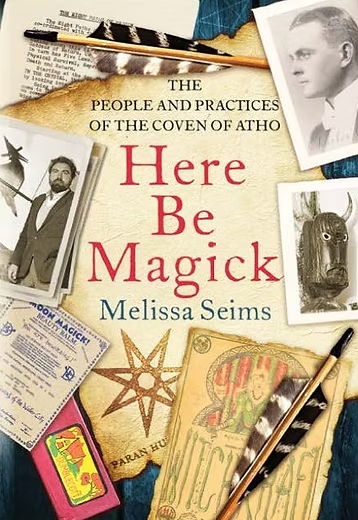
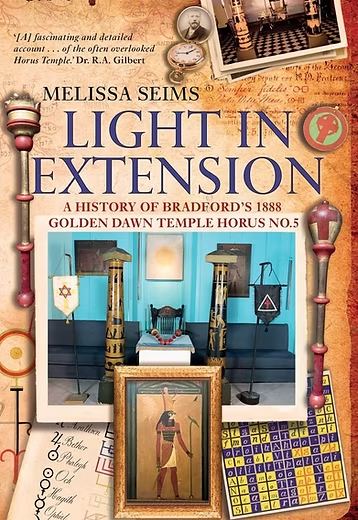
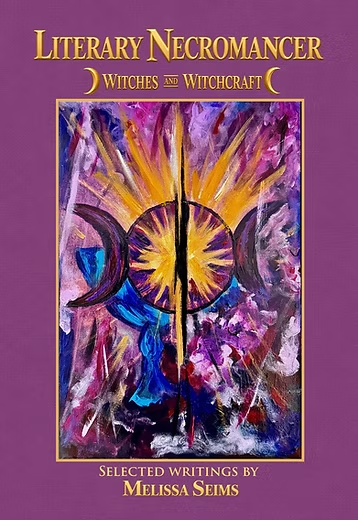
My books: Here Be Magick: The People and Practices of the Coven of Atho, Light in Extension: A History of Bradford’s 1888 Golden Dawn temple Horus no.5, The Flaming Pentagram, Literary Necromancer 1: Witches and Witchcraft and Literary Necromancer 2: Magicians and Temples. All books can be ordered signed directly from me (contact me via www.thewica.co.uk ) and are also on Amazon or available through your favourite bookshop. The two Literary Necromancer books are due for release by the end of September 2026.

Biography
Melissa has been writing on witchcraft, magic and the occult for more than twenty years, and
has followed a variety of magical paths for over thirty-five. As an initiate of the Charles
Clark line of Gardnerian Witchcraft, and a member of a Golden Dawn temple for over twenty
years, her core subjects are Witchcraft and Ritual Magic.
She is the author of Here Be Magick, a historical investigation into the magic, court cases and
melodrama surrounding the mysterious Coven of Atho. Her most recent book, Light in
Extension: A History of Bradford’s 1888 Golden Dawn Temple Horus No. 5, explores the
legacy of this often-overlooked second temple of the Golden Dawn and its place within the
wider occult landscape of Victorian Yorkshire.
Melissa is also the founder of the exciting new project Custodia Borealis, which has
established an archive dedicated to preserving artefacts, documents and other material from
Britain’s rich and diverse magical history. It’s longer term aim is to establish a Museum of
Magic and the Occult. More information can be found at www.custodiaborealis.org. She is a
key trustee for this non-profit company (awaiting charity status) Additionally, she is a trustee
for the Doreen Valiente Foundation. (https://www.doreenvaliente.org)
Melissa was also the founder of the Nottingham Goddess Camp in 1999, which came out of a
womens mysteries group she was running a the time. She also runs www.thewica.co.uk, a
website devoted to the history of modern witchcraft, and, together with fellow occultists and
witches, is one of the people behind Wishan Books (www.wishanbooks.org), a small
publisher specialising in facsimile editions of curious and unusual works on witchcraft that
were in danger of being lost. She is also involved with Liminal Gate Press
(liminalgate.co.uk), a new grassroots publisher bringing a fresh approach to magical
publishing and already making its presence felt on the occult scene.
Over more recent years, she has given numerous talks both online and in person and has been
described as ‘infectious esoteric chlamydia’ who brings history to life in a relatable and
accessible way.
Describing herself as a literary necromancer, (which also happens to be the title of two
forthcoming books – due Autumn 2026), when she is not falling victim to the demands of a
muse, Melissa can usually be found bouldering, or travelling in her campervan, exploring
nature reserves and historical sites.