Introduction
Jason Mankey is a Gardnerian High Priest, author, speaker, and long-time practitioner of modern Witchcraft. For more than two decades he has been involved in Paganism, writing and teaching extensively on Wicca, ritual, the Horned God, the Book of Shadows, and the history of the modern Craft. In this wide-ranging interview, we discuss initiation, coven life, solitary practice, deity, ritual experience, the development of Wicca, and what Witchcraft needs to preserve as it continues to evolve.
Jason writes at Raise the Horns on Patheos and maintains links to his current work, social channels, Patreon, and other projects through his Linktree. Linktree
Raise the Horns
Jason Mankey links
Your Path into Witchcraft
PAA: You have been involved in Witchcraft and Paganism for many years. Looking back, what first drew you toward Wicca, and what has kept the tradition meaningful to you over the decades?
I’ve always been interested in mythology, and the gods who populate many of those mythologies. I think my first library book was one on the Greek gods, and by the time I was in second grade my father was lending me his mythology books from college. Finding a spiritual path that acknowledged those gods as real was very appealing.
But the thing that resonated the most was the idea of the Goddess. I grew up as a Methodist, and the divine feminine is just completely lacking in that tradition. In Catholicism there’s at least the Virgin Mary, there’s nothing in Protestant Christianity. And the world is made up of more than men, why on Earth would the divine be completely male? Finding out that people actively worshipped and honored the Goddess was revelatory.
Later I would find that the divine feminine resides in lots of other traditions too, but Wicca’s ritual structure is so appealing to me! That’s really why I’m not a Druid or a Reconstructionist or some other form of Pagan, the way Wicca is structured just works for me. The way Wiccan ritual unfolds makes sense to my brain, and it’s completely interactive. Growing up in the Christian Church I think I was always waiting for some sort of extraordinary experience that never came. Within Wicca it is possible to have extraordinary experiences every time you cast a circle.
Wicca still has meaning because I’m still discovering things within the tradition. What Wicca’s critics often miss is that Wiccan-Witchcraft offers opportunities for those “extraordinary experiences.” Being initiated into a tradition, drawing down the moon, raising the cone of power, those are all really amazing things, and every time I’m in a space where they are enacted I learn something new.
I also have to give a shoutout to Led Zeppelin for finding Wicca. I picked up DJ Conway’s “Celtic Magic” (essentially a Wicca 101 primer) because I thought it would reveal things about the lyrics in Zeppelin songs.
PAA: Your path eventually led you into Gardnerian Wicca and initiatory practice. How did entering a traditional coven change your understanding of Witchcraft compared with your earlier, more solitary practice?
I had some great experiences as an eclectic Wiccan (and still do!) but being part of the Gardnerian tradition linked me to energies I had not experienced previously. I think the egregore in Gardnerian Wicca is real, and that when you practice the Gard Tradition you connect with a current that has been flowing now for at least eighty years, and possibly longer.
In Gerald Gardner’s books he writes often of reincarnation and being “reborn among those we loved, and (that we) will remember, know and love them again . . .” I just love that idea so much. When people ask me what Wicca is, I often reply with “reincarnation cult” because I think both Gardner and his likely initiators believed themselves to be “reborn Witches” who had found each other again in their new lifetimes. There are just so many people I’ve met over the years whom I’ve felt an instant kinship with; reincarnation explains that feeling to me.
Before being Gardnerian, none of that had ever really occurred to me. Now it’s a fundamental part of my practice as a Witch.
By the time I was initiated into Gardnerican Witchcraft I had been practicing alone and with people for over twenty-years. I wasn’t a neophyte when I was initiated. I had a good long history of experiences in the circle and of writing sabbat rituals. I love being a Gardnerian, but I think I would have to come to the reincarnation revelation on my own accord eventually.
PAA: Are there aspects of Witchcraft that you feel can only really be understood through sustained practice rather than through reading and study?
Wicca is meant to be done. It’s less of a philosophy and more a ritual system. To be Wiccan you have to do Wicca. You can learn a lot about magic and history by reading books, you can’t experience drawing down the moon or raising the cone of power in a book.
Even outside of Wicca, I think all Witchcraft practice is about practicing Witchcraft. If you aren’t living a magical life and leaving offerings for the dead in the Fall what are you doing? The word “craft” is in Witchcraft, crafts are only learned by doing.” You’ll never be a talented carpenter unless you actual do carpentry; the same goes for Witchcraft.
PAA: Looking back at yourself as a younger practitioner, are there things you understood very differently then than you do now?
Pretty much everything! When you are young and just starting out you muddle along as best you can, and still, you have great experiences despite not knowing a whole lot. But I think those great experiences are more the result of unbridled enthusiasm than an understanding of anything.
Who is the Great Goddess of the Witches? Who is the Horned God of the Witches? My answers to those questions are very different today than they were in 1995. And the reason those answers are different is because I’ve experienced deity now probably hundreds of times. There’s also so much more information available now too. A lot of that information is academic, but a lot of it is just being able to share experiences and encounters with other practitioners.
I think of ritual in many ways like a building project. You start with the foundations and move on from there. Today I’m much better at building those foundations than I was when I was 22. I also think I understand them a lot better, not just mechanically, but also historically.
Gardnerian Wicca and Living Tradition
PAA: You have spent a great deal of time studying Gerald Gardner and the development of modern Wicca. After all that research, how has your understanding of Gardner changed?
Surprisingly, not all that much. Gardner was a flawed human being, just like the rest of us, and he was not a prophet or a guru. I give him credit for assembling Modern Wiccan-Witchcraft, but even without Gardner I think it would have emerged in some shape or form last century.
I do think Garnder was very committed to Wicca and did everything in his power to promote it over the final fifteen years of his life. That I find commendable, but I felt that way a good decade before my eventual initiation into Gardnerian Craft.
PAA: Modern scholarship has given us a much more nuanced picture of the origins of Wicca than was common several decades ago. Has that deeper historical understanding changed the way you experience the tradition spiritually?
When I discovered Witchcraft as an adult in the early 90s, I was all in on it being “The Old Religion” and predating Christianity. And while lots of magical practices do predate Christianity, not to mention a whole lot of goddesses and gods, the fact that the rest of it is more contemporary hasn’t changed my experiences one way or another. I think it all comes back to that idea of “doing.”
Whether my ritual practices are ancient or modern doesn’t change the fact that they still work. Finding out that the Freemasons were a bigger influence on Wiccan-Witchcraft than the Eleusinian Mysteries didn’t lead to the rituals somehow becoming less potent or “less real.” Some people have way too much concern over how old (or new) certain ideas are.
PAA: Wicca drew upon a number of earlier influences, including ceremonial magic, folklore and the wider Western esoteric tradition. What do you think allowed those different elements to become something recognizably new and alive?
When people ask me what Wicca is truly about I like to reply with “Magical Tradition” or “Magical Religion.” Everything that we do in a Wiccan circle is infused with magic. We transform the elements, interact with deities, and raise energy and power to better our lives. Obviously, things like “ceremonial magic” and the “esoteric tradition” are magical, but folklore is magical too. Stories can take us to different places and realms, and folklore contains truths that we might not understand or see upon initial exposure to them. I think that’s magic in its own way.
We also haven’t really touched on Wicca’s connection to “nature religion.” Most Wiccans I know hold the natural world in awe and feel connected to the change of the seasons. I think all of that is also magical. That all of these different magical elements mesh together so well shouldn’t be a big surprise to anyone. People have been looking for an interactive practice that offers access to the mysteries and creates a stronger bond between themselves and the natural world for a long time.
Because Wicca is about its ritual structure more than theology, it always has room for growth. One thing that Gardner did that he doesn’t get enough credit for, was that he always talked about other Witches existing. In other words, there were new avenues to explore waiting around the corner if you could just find them. Today we are exploring those avenues, it’s why there are so many different Witchcraft traditions. A stagnant Craft, one that never changes or grows, is not very appealing.
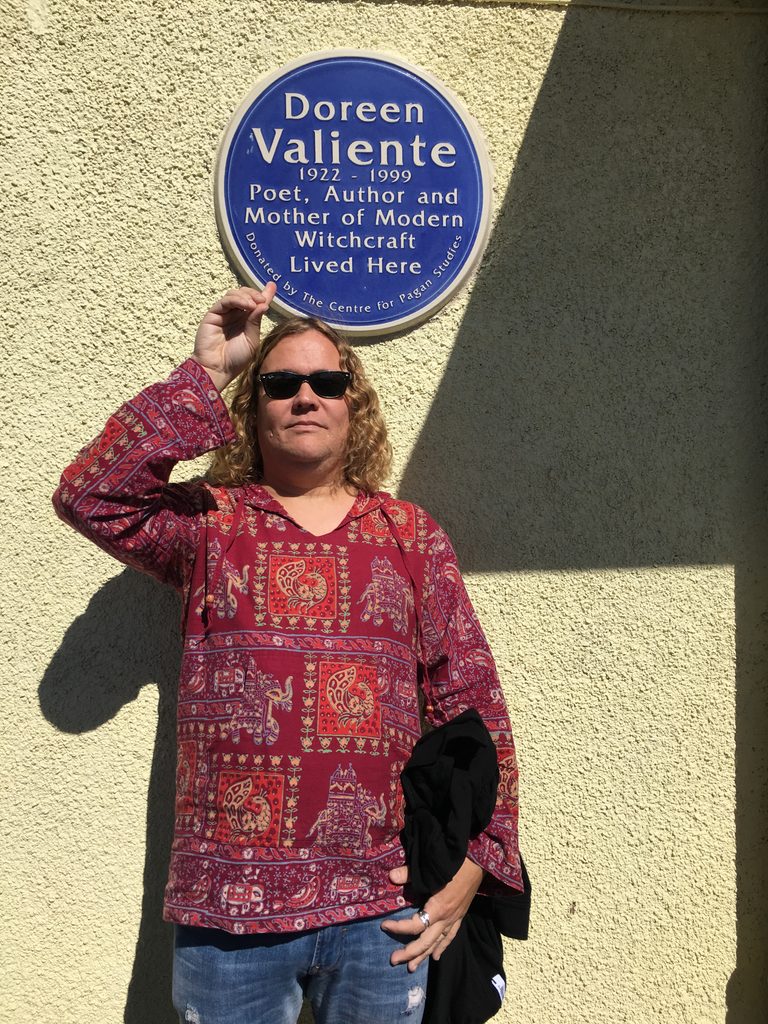
PAA: Doreen Valiente played an extraordinary role in shaping modern Witchcraft. What aspects of her contribution do you think deserve greater recognition?
It’s not just Doreen; there are a whole host of early pioneers that are largely unknown to younger practitioners. I don’t know exactly how important it is to be familiar with the first Modern Witches, again, the heart of Witchcraft lies in the doing, but we are here today in large part because of people like Doreen were proud to be Witches and opened hundreds of doorways for all of us who would come later.
Even among people who are well read, Valiente’s role as a historian is sometimes overlooked. Not only was she there in Gardner’s early days as a public Witch, she also worked with Robert Cochrane and in many ways remains our best documentarian of his practices. Valiente’s “Rebirth of Witchcraft” (book, 1989) contains so much fascinating historical information, and Valiente realized how important a lot of it was. For instance, she writes about “Operation Cone of Power,” describing the ritual in as much detail as Gardner ever did. When she asked Gardner about that rite, she knew that his answer was important and that she should write it down. Many of her contemporaries did not have her foresight.
Also, I like to think Valiente’s Craft was always changing and adapting because that’s what a good practice does! She’s mostly thought of a “Gardnerian” but that was only one brief stop on her Witchcraft journey. During her time on earth, she was continually expanding the circle and exploring the various threads of the Witchcraft tapestry.
PAA: How do you personally balance respect for the myths and stories that traditions tell about themselves with the findings of historical scholarship?
Myths are meant to tell truths in the form of stories. Was there one Horned God for instance that all other horned and antlered deities emerged from? It doesn’t seem likely, but the idea is a beautiful one and reflects how important game animals (which usually had horns or antlers) were to our early ancestors. Those animals provided not just food, but also shelter, clothes, tools, and more! Margaret Murray’s story of the Horned God might not be completely accurate, but she still captures truths within it.
We also shouldn’t be scared to reinterpret, retell, and remix our stories and myths. All of those tales should resonate with us today, and that means they might need to be tweaked here or there. It’s nice knowing the original (or at least older) version of a myth, but if that story doesn’t resonate it ultimately doesn’t mean very much.

Initiation, Coven and Solitary Practice
PAA: What do you think initiation is actually intended to accomplish within a tradition such as Gardnerian Wicca?
One of the defining forces of good Wiccan ritual is connection. Pretty much every ritual provides connection in some form or another. During sabbat rituals we connect to the Wheel of the Year and the changing seasons. Magick connects us to a current that has been empowering human beings for thousands of years. When we invoke deity, we are connecting to various goddesses and gods. Initiation is no different, it too is about connection.
Initiation provides connection to several different things. The most obvious connection involves the people immediately around us during an initiation ritual; at initiation we connect with a coven-a chosen family. (And if you are the initiator, you too are connecting!) Then there is the connection to the tradition itself, that egregore is undoubtedly real, and when someone is initiated, they tap into that power, history, and energy. Most initiatory traditions also have specific (named) deities, and initiation connects people to those higher powers. Connecting with all of those different things is one of the goals of an initiation.
I also think for some people initiation provides a level of validation in their Witchcraft practice. Being initiated suggests that a group of people think you are a powerful and awesome Witch and want you around to be a part of their practice and tradition. Going into the next steps, elevation feels like a way to recognize a Witch who has taken their practice to an even higher level.
PAA: What can a healthy coven provide that is difficult to reproduce through solitary practice?
The energy is just so very different! Certainly, solitary practice can be tremendously rewarding, and for some people it’s all they need. I’m not here to argue against that, and there are certainly more solitaries today than initiates. But especially within Wiccan-Witchcraft, the tradition was designed with coven practice in mind. It’s hard to access the greater mysteries of Wicca in a solitary setting.
A group can generate more energy than a single person, and when the Cone of Power has truly been created and the air around you starts to feel heavy like soup, and your skin tingles because of the power being raised . . . . I never felt that as a solitary. And to be honest, I don’t feel it in most groups either, but when a coven is truly operating as a coven (in something approaching “perfect love and perfect trust”), everything changes.
There are also things like drawing down the moon which were designed with groups in mind. Certainly, I’ve had intense experiences with deities outside of coven practice, but it’s another thing entirely to talk with a deity because they are inhabiting the body of a coven member!
Again, groups are not for everybody, and for some people they are not practical or accessible for a number of reasons. In my case though, I don’t think my practice really blossomed until I started doing coven ritual on the regular.
PAA: At the same time, many serious practitioners may never have access to a traditional coven. What advice would you give someone who wants to develop a deep and disciplined solitary practice?
I think consistency is the key. As a solitary it’s easy to put off ritual or come up with an excuse not to celebrate a sabbat. But you don’t grow as a Witch unless you do Witchcraft. Early on I remember reading something in a Scott Cunningham book where Scott says, “reading doesn’t count, you have to do Witchcraft.” I felt like he was writing just for me because I used to put aside an hour every day for the Craft but mainly spent that time reading instead of doing.
When you have problems, you should do magic! As the Wheel turns you should redecorate the mantle above your fireplace to reflect those changes! Pour libations to the Goddess and God and talk to them! Praying seems like it’s a bad word in Witchcraft spaces, but praying is just talking to higher powers. Ask Dionysus for help and call out to Grandma when you miss her! Those are all things Witches do. That’s how you build a strong practice.
PAA: What qualities make a coven genuinely valuable to its members rather than simply a group of people performing rituals together?
It’s cliché to say, but ideally a coven is a chosen family. You should be involved in each other’s lives to some degree. That doesn’t mean you have to spend all of your free time with coven members, but if you don’t enjoy the company of the people in your coven there’s something wrong there. I’ve taken coven members to surgeries, and I’ve had coven members at my side when dealing with problems. Coven members are people you can rely on, especially if you’ve been together for several years.
I’ll also say that if you work together as a coven for an extended period of time, you’ll be able to finish each other’s magical sentences. There are times with our group where whoever is leading the ritual doesn’t have to say anything because everyone knows what needs to come next. That’s pretty powerful stuff.
Ritual and the Experience of Witchcraft
PAA: After participating in and leading rituals for many years, what do you think distinguishes a truly powerful ritual from one that is merely technically well performed?
This comes back to that idea of connection; a truly powerful ritual should connect you to something greater than yourself. I’ve been to some lovely looking rituals over the years where the setup was immaculate and all the people running the ritual wore matching robes. But after the costumes and stage setting there was nothing else there. The ritual didn’t draw me closer to anything. Public ritual especially is really hard, and oftentimes it doesn’t work for a whole host of reasons, but that idea of connection should be a part of the proceedings.
Rituals are also more powerful when they are not “plays.” You want to have everyone involved in the ritual in some way! Whether it’s just chanting or dancing, a ritual needs to be more than someone talking at everyone else. There needs to be something linking everyone together in the circle.
PAA: How important are altered states of consciousness, trance, ecstatic experience or deep imaginative engagement within Witchcraft?
When most people think of “altered states of consciousness” they imagine psychedelic drugs and things of that nature. But there are all sorts of different ways to enter altered states of consciousness. I think ritual on its own creates a trance like state when it’s done properly.
In our coven we use the same opening setup at every ritual, and when we do our opening chant and then light our coven incense, I am immediately transported to another world. I don’t need any chemical substances to all of a sudden find myself in a different place.
And when I enter that “different space” all sorts of different worlds open up. That’s the time and space where I can feel my beloved dead around me once again at Samhain, or experience the power and protection of Brigid at Imbolc. I definitely think of those experiences as ecstatic, they change the foundations of your reality, and being close to those energies influences how you feel in that moment.
Turning off the skeptical part of the brain makes for a better Witchcraft practice. With time it’s possible to learn how to do that naturally or through ritual. I think many people have intense experiences with psychedelic drugs because it’s the first time they’ve ever been able to do that, and experience something outside themselves. Even a glass or two of wine will produce a similar result. It softens the mind, which makes it easier for the fantastic to slip through an be perceptible.
Because I’ve done a lot of public rituals for the Horned God and in honor of Jim Morrison (of the Doors) there’s an assumption I do a lot of rituals with chemical enhancement. But I actually like to be sober during ritual.
PAA: When people speak about experiencing the presence of a deity during ritual, how do you understand that experience?
I think there are levels to that experience. When we “call” to deity, deity can then decide whether or not to show up. Sometimes they do, sometimes they don’t. But when they do show up you can feel the space around you begin to change. Let’s say you call to Aphrodite and she shows up, you might find yourself beginning to think about people you love or are at least attracted to. The energy of Aphrodite in that case influences our thoughts. But maybe she’s only peeking into the ritual, so it doesn’t get much beyond that.
After that there’s a second stage, where she’s looking into the ritual and actively taking part in the ritual. This is when the air around you begins to feel heavy, and you find yourself high and giddy on the ideas of love, beauty, and sensuality. If you are with a romantic partner, perhaps at this point you become a bit demonstrative with them . . . I don’t think a full-blown orgy is going to break out or anything, but maybe the way you walk or talk is affected by Aphrodite’s presence.
The third stage of that is drawing down the moon, where all of the goddess’s energy is in the room and you can interact directly with her. I think of interactions with deity on a scale of one to ten. At one she’s been invited to the party, at ten she is the party, and her power influences everyone in the circle.
I was at a ritual once where the High Priestess called down a Mother Goddess. In the minutes that followed I felt like I was in the middle of a giant hug, and it was one of the most beautiful experiences I’ve ever had during ritual. That was the power of a goddess made real and manifest, and I had an experience I will treasure forever.
I think the gods are real, but they interact with us differently than human beings do. They don’t necessarily speak to us (outside of drawing down the moon) but by their energy and presence make themselves known to. When it’s real you just know.
PAA: Have there been particular ritual experiences that significantly changed your understanding of Witchcraft or of the gods?
In my early years of being a Witch, I really liked the idea of being a Witch, especially the idea of interacting with deity. But there was always a little nagging voice in the back of my head that wondered if any of it was real. A few years into my Witchcraft journey I began working with a group and one year for Samhain we decided we were going to have a “big and serious” ritual, which for us meant using Janet and Stewart Farrar’s The Witches’ Bible.
At that ritual two friends of mine conducted a drawing down the moon rite, something I had never experienced before. Over the course of several minutes, I saw a woman I had known for two years change right before my eyes. The way she carried herself was entirely different, and I swear her skin was glowing-it’s like she had swallowed a couple of glow sticks and that light was shining out through her body.
At that ritual my now wife also read “The Charge of the Goddess” by Doreen Valiente. As she read the cadence and pitch of her voice changed, and the room began to fill up with power. She too had drawn down the Goddess that night, and it was noticeable. If you knew her, you knew that she wasn’t herself at that moment.
I never doubted the existence of the gods after that night.
The Horned God and the Gods of Witchcraft
PAA: You have written extensively about the Horned God. After so many years of research and practice, who or what is the Horned God to you personally?
When writing about the Horned God I often worry that I sound like an unbeliever. When it comes to deity so many people want everything to be OLD, like seriously ancient, and if something isn’t old then they look at it with skepticism. The idea of the Horned God as one universal and ancient deity just isn’t true. While there were several horned and antlered deities in antiquity there’s not “one source” for all of those figures. When writing about that I feel like I’m tearing down ideas that are foundational to a lot of people, but as a writer I have to follow the historical record wherever it leads.
But while history doesn’t have one “Horned God,” I still find myself attracted to the idea, and believing in that figure. I’ve always thought it takes a great deal more hubris than I have to suggest we know how deity “works.” Could the various forces that make up the modern Horned God (Cernunnos, Pan, Elen of the Ways, Devil folklore, etc.) have found some way to connect and create a new being? I don’t know if that’s possible, but that’s what I think the Horned God is. He (or They) is a composite being made up of several different aspects. Perhaps most importantly, that figure will appear to everyone a little bit differently. Perhaps aspects of Pan are more predominant for some people, while the gender-bending Dionysus features more prominently for others?
To me the Horned God is a modern figure with features from antiquity that connects us to the natural world, lustiness, pleasure, joy, death, and Witchcraft. I’m also cognizant of that being my understanding of the Horned God, and that others might feel differently.
PAA: The modern image of the Horned God draws upon figures such as Pan, Cernunnos and several different strands of folklore and modern Pagan thought. How do you understand the relationship between these different figures and the Horned God encountered in modern Witchcraft?
I think all of those forces work both together and separately. I believe Pan and Cernunnos are independent and individual deities, not only do they look quite different, I think they had very different functions in their societies. But I also can’t help thinking those gods are related in some way we don’t understand and are also a part of the larger Horned God construct. In my own practice I interact with those specific deities, and then the larger or composite Horned God.
Sometimes when experiencing (or just reading) a Witchcraft ritual you read the words “Horned God” and then see a more specific deity peeking out the other side of it. So sometimes the term “Horned God” also acts as a title. At Samhain for instance you might call the Horned God in his role as the “Dread Lord of Shadows,” but in my experience that figure is Cernunnos. Same goes with calling the Horned God to frolic under the maypole at Beltane, that’s probably Pan.
If these answers all sound a little muddled, that’s because once again, I’m not sure I’m smart enough to understand just how deity works or is created. Experiencing a figure like the Horned God is one of those mysteries that’s best done inside the circle, or perhaps in the wild spaces where he dwells.
PAA: What is the difference, in your experience, between studying a deity intellectually and developing an actual devotional or ritual relationship with one?
When writing about the history of deities, you do have to detach yourself to some degree from the devotional aspects. In many cases, whether it’s through linguistics or archeological research, we can trace the development of deities, watching as new gods evolve out of old, and how the myths of one culture are absorbed by a second culture. Writing about that stuff is what makes me sound like a non-believer sometimes, but again, you have to go where the evidence takes you.
But even while reading an academic paper and taking notes I still feel my various gods close to me. Pan might not understand why I feel it’s necessary to try and trace his origins back to the Indo-Europeans, but I don’t think he’s bothered by it. While I hold myself to a high standard with information, I’m also not a historian or an academic. I can go places those who work in the academy cannot go.
In The Horned God of the Witches there’s a chapter dealing with the Horned God as a god of death. The idea of the Horned God as a god of death is mostly absent from books about the Horned One that pre-date Gerald Gardner’s Witchcraft Today (1954). As a believer in the gods, I have to wonder if the Horned God planted that idea of being the god of death in Gardner’s mind. That’s a place a historian can’t go. I feel blessed that I get to write in this middle ground that lets me embrace my inner practitioner and my inner armchair historian.
PAA: When working with gods from ancient cultures, how can modern practitioners approach them respectfully while still allowing those traditions to develop as living spiritual practices?
I think you have to understand where the gods you work with come from, and where they’ve been since. The Norse, Greek, and Celtic gods have all taken some wild detours over the centuries. Pan is a Greek god for instance but was reborn in a sense in 19th Century England where he became connected to the idea of the lost English Countryside. Some people will say that’s misappropriation (or even cultural appropriation), but if we believe the gods have agency, isn’t it possible that Pan whispered that idea into the ears of poets such as Shelley and Keats?
Where we have to be careful is understanding where all of these different ideas about gods like Pan came from. The Pan of the Greeks was very different from the Pan of the English. I like to think gods change and grow over time (people do, why not deities?), and the Pan found in Modern Pagan traditions today mostly reflects a blending of the two. The Pan of Greek Myth is just as real to me as the Pan of The Wind in the Willows.
And every tradition we have today is modern in some sense. There are people actively seeking to recreate ancient pagan traditions, but our societies are so different from what was here 2000 years ago. I’m not sure those traditions can be recreated exactly as they were for that reason.
We like to pretend that our ancient pagan ancestors were all wise and respected the natural world. I’m sure some of them had those virtues, but many many more did not. Our ancestors clear cut forests and littered in wild spaces. A lot of them also treated women poorly and were especially violent. Let’s hope everything is continuing to develop! The alternative is not something I want to contemplate.
The Book of Shadows and Esoteric Transmission
PAA: You have written extensively about the Book of Shadows. What do you think people most misunderstand about what a Book of Shadows originally represented within initiatory Wicca?
There are some people who think a specific tradition’s Book of Shadows is where the mysteries are kept. But the mysteries lie in the doing, not the words on the printed page. You could steal my Gardnerian Book of Shadows from me and try to do all of those rituals, but you wouldn’t be doing anything close to Gardnerian Wicca. Because the Gardnerian Tradition is a living tradition, there are parts of it that are just not written down, and there are little quirks and idiosyncrasies that are only passed down through the doing.
I think originally the Book of Shadows served as an outline for doing things, but that was eventually reinterpreted as “holy writ.” The Book of Shadows is a starting point; it’s not the final destination.
PAA: In an age when enormous amounts of occult and initiatory material circulate online, does secrecy still have an important role within Witchcraft?
Again, there’s a lot that’s not on those printed (or published) pages. Having a secret or two is also magical in its own way and creates its own sort of power. If secrecy is important to the individual Witch, then I think they should seek out groups that hold onto secrets.
PAA: Do you think some teachings derive part of their value from being encountered at the right stage of practice rather than simply being made available immediately?
Yes actually! There are things we are sometimes just not ready for. I certainly shouldn’t have been initiating people twenty years ago. I’m glad I went through a process that revealed to me that secret when I was ready for it. One of the things about Wiccan-Witchcraft a lot of its critics fail to understand is that it builds upon itself. The open ritual at the UU Church is not all that Wicca can be, that’s just the starting point.
Witchcraft Today
PAA: Witchcraft has become vastly more visible during your lifetime. What changes in contemporary Witchcraft have most encouraged you?
I love how the Witchcraft world has become more inclusive over the last seventy years. There is a place for everyone in the circle, and we are seeing that more and more.
PAA: Are there aspects of older Pagan or Witchcraft culture that you worry may be lost as the community becomes larger and more public?
I’m going to veer off topic a little bit in answering this question, because this question brought three very different things to mind for me, and they may or may not all actually pertain the original query.
When I was starting out in Paganism and Witchcraft in the 1990s most practitioners thought of what they did as a religion. Today, religion is mostly seen as a bad word because it implies dogma and a rigidity of thinking many practitioners rebel against. I don’t care if people want to call what they do “spiritual” or simply “magical practice,” but I worry that if we leave the word “religion” behind we might lose certain rights.
If we aren’t a religious grouping it becomes that much easier to fire us from jobs, refuse to rent us properties, lose custody of kids in court, and to get 501C status. Christian Nationalism (and not just in the United States) is a growing phenomenon, and I’d like to see our rites protected as much as possible. Forgoing identifying as a religion might be the open window religious bigots use to keep Pagans and Witches from having access to all of their civil rights.
In the age of social media, in person interactions are declining, and not just in our community. There are lots of Pagan and Witch events in the United States, but we’ve seen some contraction and readjustment of those events in the last fifteen years. The “outdoor Pagan festival” used to be a much bigger thing. Diminishing attendance is probably the result of a population that is getting older (it’s hard to camp with a bad back) and a younger generation that doesn’t like camping as much. Outdoor festivals were our original internet back in the 1970s/80s. It was where Witches and Pagans met to exchange ideas, chants, and songs.
It’s not all bleak; there are more successful indoor events than ever before. The Big 4 of ConVocation, Paganicon, Sacred Space, and Mystic South (there are also several up-and-coming smaller events too!) are all drawing great numbers, and because they are in hotels have evolved into national events. (It’s easier to fly into an event that’s at a hotel than to fly into a camping event.) But the price tag for indoor gatherings tends to be larger because of how expensive hotel rooms are. The outdoor events have always been more accessible when it comes to the price point.
Witchcraft especially has always been a refuge for the oppressed, and not the affluent. Certainly, we welcome all comers, but if your practice doesn’t have room for people of color, the LGBTQ+ community, and the economically disadvantaged, I’m of the opinion that you are doing it wrong.
PAA: Social media has introduced enormous numbers of people to Witchcraft. What do you think it does well, and where can it give newcomers an incomplete picture of actual practice?
I think social media is great at providing opportunities. If you are looking for a group (online or off) you can usually find one on social media. It has also brought Pagans and Witches from all over the world together. When I travel internationally I almost always end up hanging out with other Pagans and Witches that I’ve met online. That’s one of the coolest things ever.
But there are also loud people on social media who misrepresent practices and seem to love to cause divisions. Wicca has borne the brunt of this, with lots of things said about the practice that are simply untrue or represent where many Wiccans were forty years ago.
There was a social media influencer a few years ago claiming Gerald Gardner had come up with the name “Mabon.” No matter what one might think of Gardner, the accusation was just not true on any level at all. And if the person spreading such misinformation had done just forty-five seconds of research they would have seen they were wrong. But this person apparently had a large social media following for whatever reason and it got a lot of traction in certain spaces.
That’s not an indictment on the discernment abilities of Witches and Pagans, irresponsible influencers spreading misinformation is a problem in every community. But it’s easier now than ever to gain a large following all while not really knowing anything about the Craft or the extended community.
Practice and the Future
PAA: For someone who has read widely about Witchcraft but now wants to move from reading into genuine practice, what would you suggest they concentrate on during their first serious year?
Again, it all comes down to the doing. Make sure you celebrate the sabbats and do some magic. Set aside an hour once every two weeks for some sort of ritual, and when you go outside really notice the world around you.
PAA: Are there practices you regard as foundational—things that experienced practitioners continue returning to regardless of how advanced they become?
Ritual is the foundational piece in Wicca; you can only do Wicca if you practice Wicca. Within the circle I always return to building the cone of power with the coven. Nothing energizes me more than that particular magical exercise.
Outside the circle I focus on paying my respects to the gods and doing devotional practices. I will always find time to light incense, offer Florida water, and pour libations of wine and whisky to the deities and powers I feel closest to. I spend a lot of time walking and during those walks I notice what’s around me: what’s in bloom, where the sun is in the sky, how the breeze blows, etc. I think that connects me to the natural world in a very immediate way.
Sabbats especially aren’t just way stations on the Wheel of the Year, they are also repositories of folklore, customs, and family traditions. Enacting those traditions connects us to our ancestors and beloved dead. I can’t imagine the Holiday Season without reminders of my grandparents all over the house.
PAA: After all these years, what parts of Witchcraft still retain a sense of mystery for you?
The biggest will always be drawing down the moon. Interacting with deity is always an awe-inspiring experience. My initiation was many years ago now, but when initiating someone else I get to relive it all over again, and I get the same tingles I got on that long-ago March night. There’s an extra power to those rites that I think is often overlooked. I also think the Great Rite is truly great, and when I do that in a ritual context it’s especially powerful.
PAA: Finally, when you look toward the future of Wicca and modern Witchcraft, what do you most hope will be preserved, and what would you like to see continue evolving?
The things I love most will all still be around in 100 years in some form or another. There will always be a group of people who seek initiatory traditions, and Wicca is still ubiquitous even if people want to call what they do something else. (If you are calling the quarters, creating sacred space, invoking deity and then doing something seasonal or magical you are essentially doing a version of Wicca.)
Hopefully we continue evolving into a more accepting space, a place where everyone feels comfortable being their true self. There are few things more magical than being able to truly be yourself.
PAA: Thank you very much for taking the time and answering all of our questions.

Join the Perseus Community – It is Free!
A Community for Practicing Magicians, Meditators and Internal Martial Artists
Please join us, introduce yourself and begin sharing and learning. We have areas covering all aspects of the esoteric from both Eastern and Western traditions, Energy work and Internal training all freely available on the platform. See you inside.